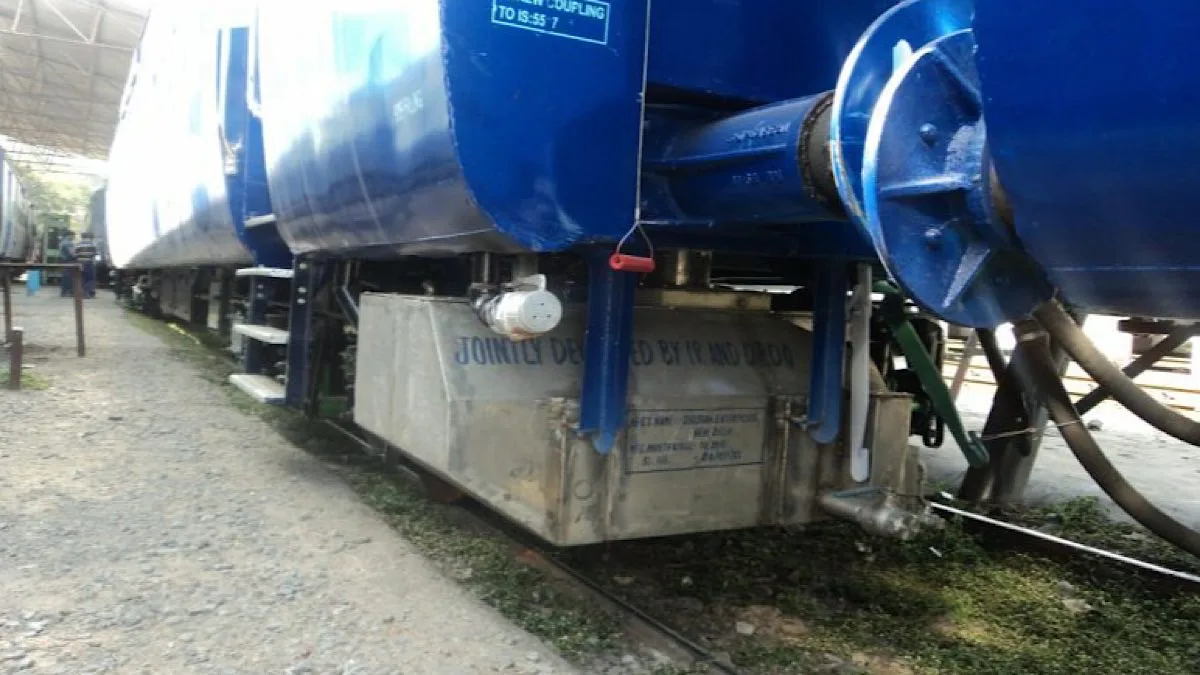
Indian Railways has made a significant contribution towards environmental sustainability and passenger hygiene through large-scale deployment of bio-toilets, with over 3.66 lakh bio-toilets fitted in passenger coaches since 2014.
This initiative has effectively eliminated direct discharge of human waste onto railway tracks, ensuring cleaner stations, improved on-board sanitation and a more hygienic travel experience for millions of passengers.
Advertisement
According to the Ministry of Railways, the bio-toilet system uses indigenous technology based on microbial action to decompose human waste into water and gases, significantly reducing environmental pollution and foul odour while maintaining cleanliness across the network.
This initiative plays a vital role in protecting the environment by preventing soil and track contamination, reducing corrosion of railway assets and promoting eco-friendly waste management.
By ensuring zero direct discharge and supporting sustainable sanitation practices, Indian Railways is improving passenger comfort while contributing to a cleaner ecosystem and a greener future.
The Ministry further mentioned that Indian Railways has made renewable energy a cornerstone of its long-term operational strategy.
As of December 2025, approximately 909 MW of solar plants and 103 MW of wind power plants have been commissioned across the network.
Beyond what is already operational, Railways has tied up a further 3,300 MW of renewable capacity, encompassing solar, wind, and hybrid round-the-clock (RTC) arrangements with developers across Rajasthan, Gujarat, Karnataka, Maharashtra, and Uttar Pradesh ensuring a sustained pipeline of clean power to support long-term energy security. This reflects a deliberate shift towards long-term, price-stable green procurement.
The Ministry also stated that Indian Railways has achieved 100 per cent LED lighting across its offices, railway stations, service buildings, and residential colonies, a network-wide transformation that spans thousands of locations from remote wayside stations to the largest junctions in the country.
The shift from conventional lighting to LEDs has delivered twin dividends: significantly reduced electricity consumption and improved illumination quality. For passengers, this means better-lit waiting halls, platforms, and subways. For the environment, it means a measurable reduction in the carbon burden of simply keeping a station open round the clock.